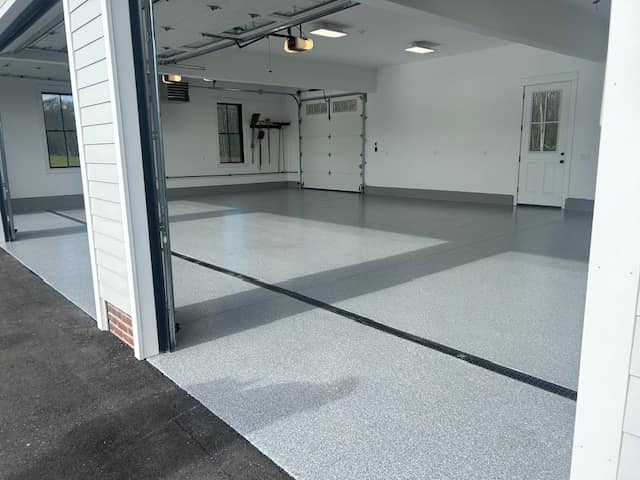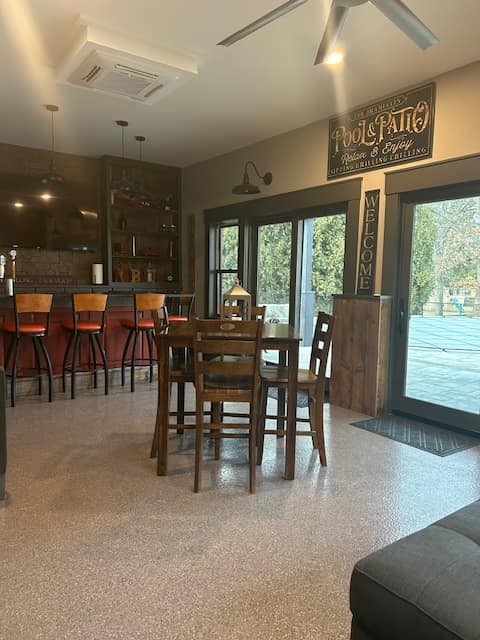
Every fall we hear the same thing from homeowners across Western Massachusetts and Northern Connecticut: "I'd love to get my garage floor done, but I guess I missed the window — I'll call you in the spring."
It's one of the most common misconceptions in this business. If you were shopping for a DIY epoxy kit, you'd be right — epoxy is famously fussy about temperature. But professional polyaspartic coatings were built for exactly the conditions New England throws at us. Here's what actually matters.
Why Epoxy Struggles in the Cold
Standard epoxy needs sustained temperatures of roughly 50–55°F or higher to cure properly. Below that, the chemical reaction slows to a crawl or stops entirely. The result is a floor that stays tacky for days, cures soft, or never fully bonds to the concrete — which is why so many cold-weather epoxy jobs end up peeling within a year or two.
That's the material most people picture when they think "garage floor coating," so they assume the whole industry shuts down from November to April.
Polyaspartic Was Designed for This
Polyaspartic chemistry originally came from industrial work on bridges and pipelines — projects that can't wait for perfect weather. It can be applied in temperatures as low as -30°F and still cure hard, fast, and fully bonded.
We grind the concrete the same way we do in July, repair cracks, and apply the coating — garage door mostly closed, no problem. The floor is walkable within hours, and the floor is back in service quickly. No lingering fumes, either: polyaspartic is far lower-odor than the solvent-heavy products of years past.
Winter Is Actually a Smart Time to Book
- Your floor takes its worst beating in winter. Road salt, brine, and snowmelt drip off your car onto bare concrete every single day. That's the season your floor needs protection most, not least.
- Scheduling is easier. Spring and summer books fill up fast. Off-season installs usually mean more choice of dates and a faster turnaround from quote to finished floor.
- You get the benefit immediately. A floor coated in December protects your slab through the saltiest months — a floor coated in May has already missed the damage.
The Ideal Play: Coat It in the Fall
If you're reading this before the first snow, the best move is simpler still: book a fall install and go into winter sealed. Salt and freeze-thaw cycles are the number one killer of bare concrete in New England — we wrote a whole guide on what road salt does to unprotected garage floors. A coated floor shrugs it off: brine puddles sit on the surface until you squeegee them out the door.
What About the Concrete Itself?
Cold concrete is fine to coat — what matters is preparation and moisture. Our crew diamond-grinds every floor to open the pores of the concrete, checks moisture levels, and repairs cracks and spalling before any coating goes down. That prep process is identical year-round, and it's the reason we can back residential floors with a limited lifetime warranty no matter the month on the calendar.
The Bottom Line
There is no "off-season" for polyaspartic floor coatings in New England. Epoxy has a window; polyaspartic doesn't. Whether it's a January cold snap or a muggy July afternoon, the install process, cure quality, and warranty are the same. The only thing waiting until spring gets you is another winter of salt eating at bare concrete.
Curious what your floor could look like? Try our free AI floor visualizer — upload a photo of your garage and see it coated in any of our 13 flake blends in about 20 seconds.
Pioneer Concrete Coatings installs garage, basement, and patio floors across Western Massachusetts and Northern Connecticut — including Springfield, Longmeadow, Agawam, Holyoke, Enfield, and Simsbury.
Don't Wait for Spring
Get a free, no-pressure estimate and go into winter with a sealed, salt-proof floor. We install all year across Western MA and Northern CT.
Get Free QuoteRelated Articles
Road Salt vs. Your Garage Floor: Protect It Before Winter
Seasonal • 5 min read
Polyaspartic vs Epoxy: The Ultimate Comparison
Comparison • 8 min read
How Much Does Garage Floor Coating Cost?
Guide • 6 min read
Try It On Your Floor
Upload a photo of your garage and see it coated in seconds with our free AI visualizer.
Open the Visualizer