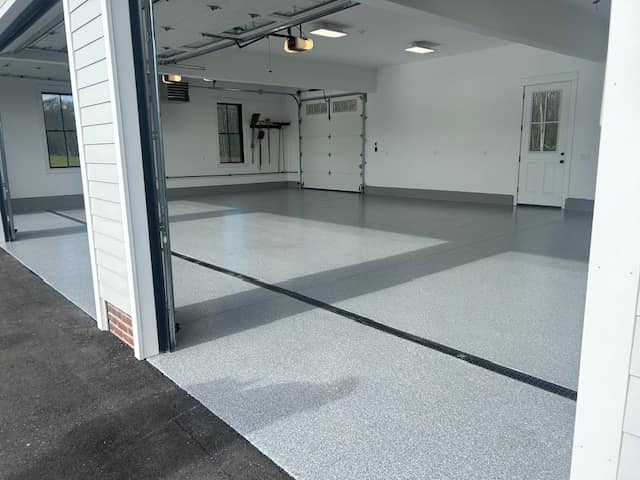
Epoxy and polyaspartic coatings serve different roles in a floor system. At Pioneer, our standard garage installation combines an epoxy moisture vapor barrier base with a polyaspartic topcoat. The right choice depends on the slab, the finish, and how the floor will be used.
What Does the Epoxy Base Do?
The epoxy moisture vapor barrier base provides adhesion to properly prepared concrete and helps manage moisture vapor within the selected product's limits. We diamond-grind the slab, check moisture, and specify the system for the job.
- Available with flake, quartz, or a solid-color finish.
- Selected for the slab's moisture conditions.
- Requires the manufacturer's surface preparation, thickness, and curing conditions.
What Does the Polyaspartic Topcoat Do?
The polyaspartic topcoat forms the exposed wearing surface. Our UV-stable topcoats are designed to resist yellowing, abrasion, and common everyday wear. Exact performance depends on the formula, installation, and care.
- Designed to resist yellowing in sunlight.
- Provides a surface that is easy to clean.
- Wipe up spills promptly and follow the Floor Care Sheet. Resistance does not mean immunity to chemical or mechanical damage.
Durability and UV Exposure
A coating system's durability depends on preparation, the concrete, the products used, and maintenance. Epoxy alone can amber in sunlight, so exposed surfaces need a suitable UV-stable topcoat. Coatings do not prevent structural movement or cracking in the slab.
Installation and Return to Service
Most garage floors take 1–3 days to install. In warm conditions, allow about 24 hours before foot traffic and about 72 hours before parking after the topcoat. Cooler conditions require longer. Full cure takes about 7 days, or longer if the selected products or conditions require it. We confirm your floor's timeline with your quote.
Temperature and Moisture Matter
The slab must stay at least 60°F during installation and initial cure, or warmer if the selected products require it. We follow the manufacturer's humidity limits and keep the slab at least 5°F above the dew point, or the greater margin the product requires. A fast-curing topcoat does not remove the epoxy base's requirements.
What Affects Cost?
Preparation, repairs, moisture control, square footage, finish, and the exact products all affect the price. Your quote identifies the selected system and work included. Compare complete installed systems and written warranty terms when comparing estimates.
The Pioneer Approach
We match the base, optional flake or quartz, and topcoat to your floor. Residential installations are backed by our written Limited Lifetime Residential Warranty. Commercial projects use their own written terms.
Contact us for an estimate and the system details for your project.
Pioneer Concrete Coatings installs garage, basement, and patio floors across Western Massachusetts and Northern Connecticut — including Springfield, Longmeadow, Agawam, Holyoke, Enfield, and Simsbury.
Get a Free Estimate
See how affordable a premium polyaspartic floor can be. We offer free, on-site consultations throughout Southern New England.
Request My QuoteRelated Articles
How Much Does Garage Floor Coating Cost in MA?
Guide • 6 min read
5 Reasons to Choose Polyaspartic
Tips • 5 min read
Why Pioneer?
- Local NE Experts
- Industrial-Grade Materials
- Quick installation Available